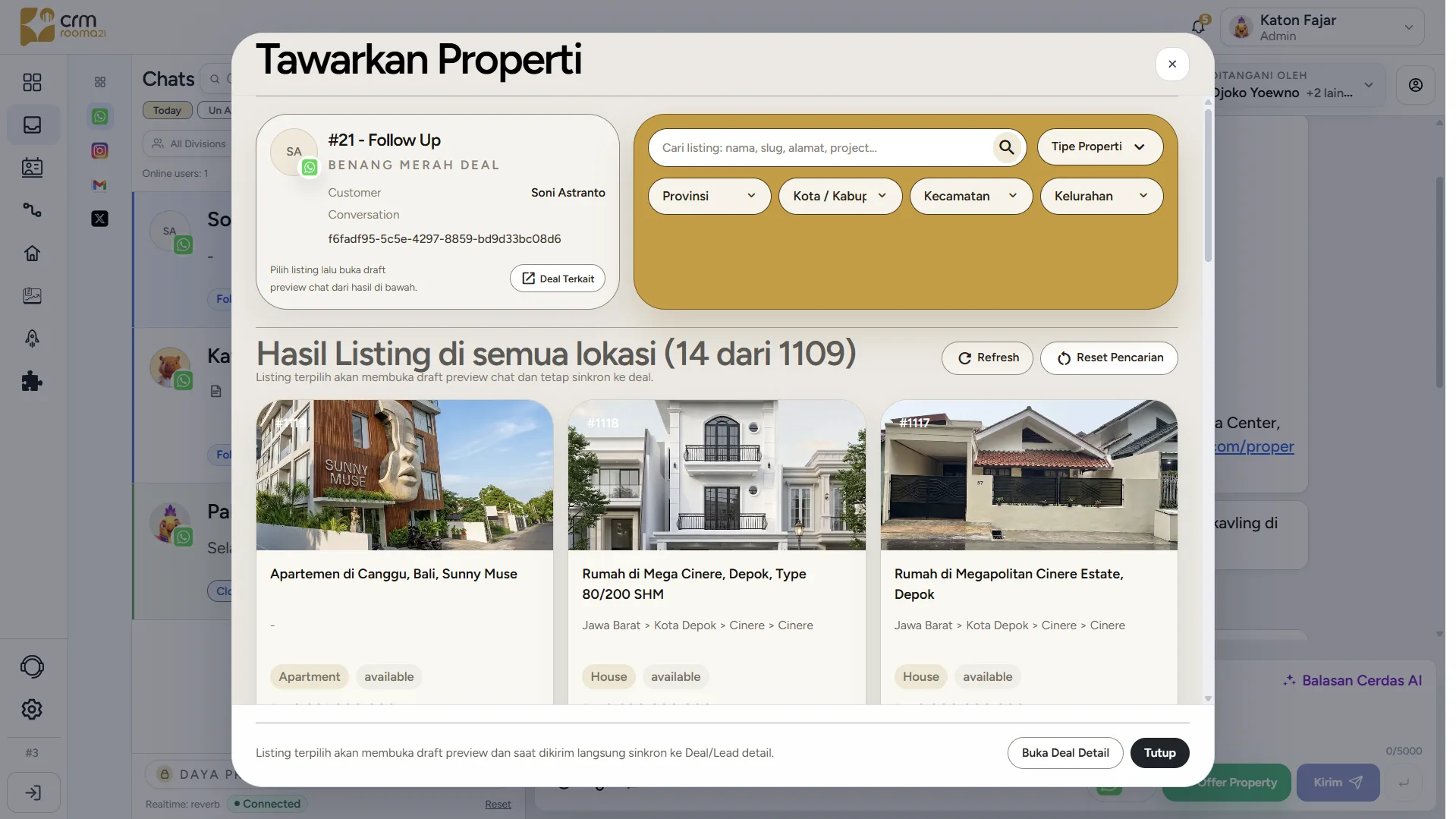
Rooma21 manages property leads generated from different marketing activities and communication channels. When contact information, conversations, follow-up statuses, and sales progress are handled across separate workflows, it becomes difficult for the team to understand the complete history of each lead.
Rooma21 CRM was developed as a central workspace for lead and customer communication management. Instead of functioning only as a contact database, the system connects contacts with conversations, messages, agents, tags, deals, campaigns, and other activities that happen throughout the follow-up process.
The application was built using Laravel 11, Inertia.js, and Vue 3, with domain boundaries separating Tenant, CRM, Messaging, Broadcast, and Analytics responsibilities. This approach keeps the application easier to extend as more operational features are introduced.
The system uses a multi-tenant architecture. User, contact, conversation, and operational data are scoped by tenant so each organizational context remains isolated. Role and permission controls are then applied to distinguish the responsibilities of Super Admins, Admins, Managers, and Agents.
Contact Management
Contacts serve as the main identity layer for leads inside the CRM.
The team can search, filter, review, edit, and organize contacts using tags. The system also supports CSV/XLSX imports with sanitization, data normalization, and deduplication to reduce duplicate records.
For operational needs, authorized roles can export contact data. Export activities are recorded so data extraction remains traceable.
Omnichannel Inbox
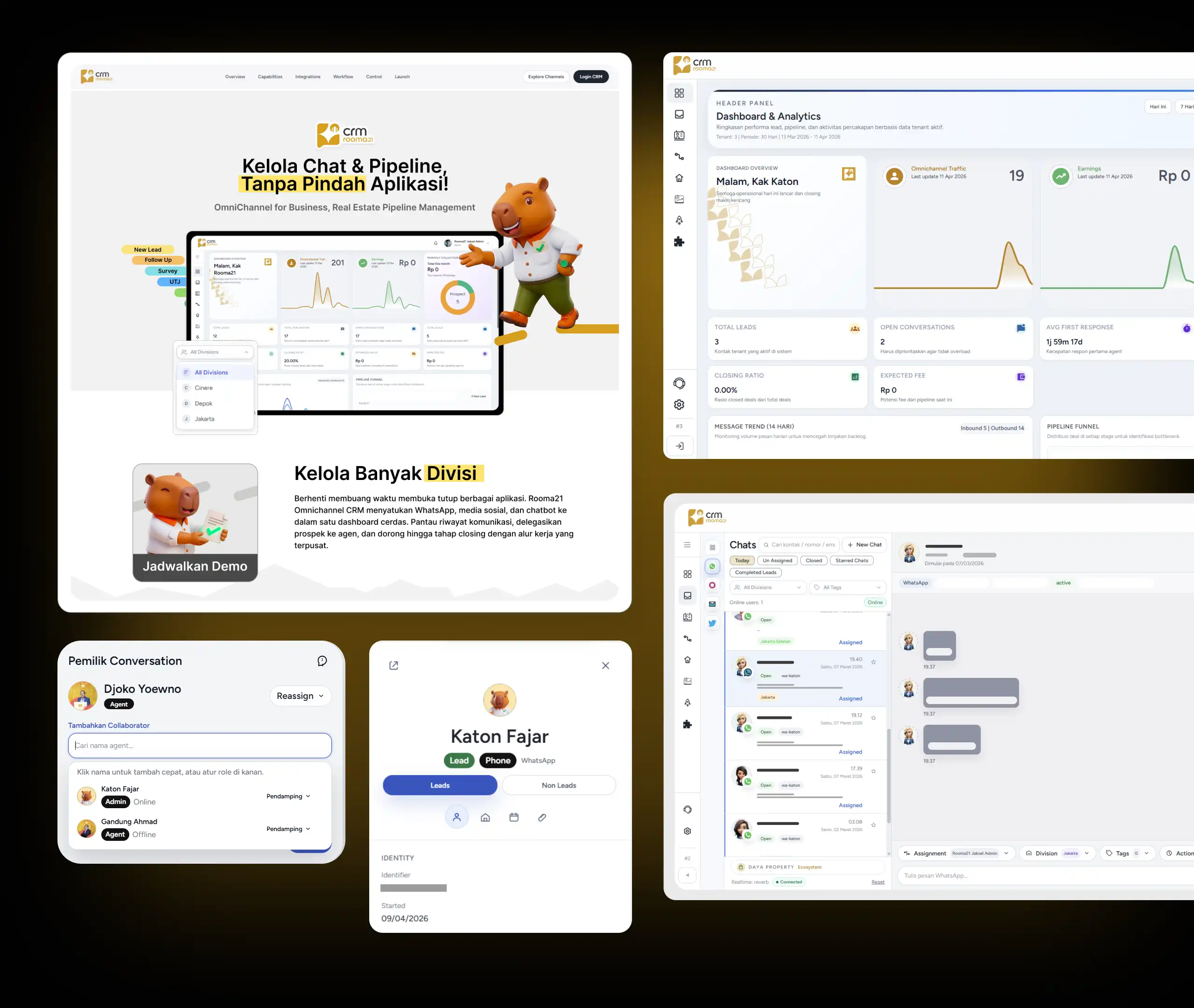
I developed a three-panel inbox workspace consisting of a conversation list, chat room, and lead information panel.
From the same interface, agents can review conversations, understand the contact context, send messages, update conversation statuses, and perform actions such as claiming, reassigning, or taking over a conversation when necessary.
Conversation states such as open, pending, and resolved help distinguish interactions that still require follow-up from conversations that have already been completed.
Realtime events are used to keep message updates, assignments, and agent presence synchronized without requiring constant page reloads.
WhatsApp-First Messaging Architecture
WhatsApp is the primary communication channel in the initial implementation, but the CRM business logic was intentionally kept independent from a single messaging provider.
I implemented a channel provider and adapter abstraction layer so the application can determine how messages should be sent or received according to the selected channel and account.
The WhatsApp implementation supports different provider paths, including a Baileys-based gateway and the Meta WhatsApp API.
Baseline adapters for additional channels such as Instagram DM and Email were also prepared as part of the architecture, although they are not presented in this case study as fully deployed production integrations.
Inbound and Outbound Messaging
Outbound messages are not processed as long-running browser requests.
When an agent sends a message from the inbox, the system creates a message record and delegates delivery to a queue. A background job resolves the appropriate channel adapter, sends the message through the provider, and updates the message status based on the delivery result.
For inbound communication, webhooks act as the entry point for provider payloads. Incoming data is normalized into the application's internal structure before further processing.
The system can locate or create the appropriate contact and conversation, prevent duplicate processing based on provider message identifiers, and persist incoming messages into the CRM.
Inbound media such as images and files is handled separately and stored within tenant-isolated storage paths.
Conversation Routing
The CRM supports conversation distribution across agents.
Conversations can be claimed, reassigned to another agent, or taken over by users with the appropriate permission. Assignment changes are recorded so operational activity remains traceable.
Agent presence is also part of the realtime foundation to provide additional context within the communication workspace.
Sales Pipeline
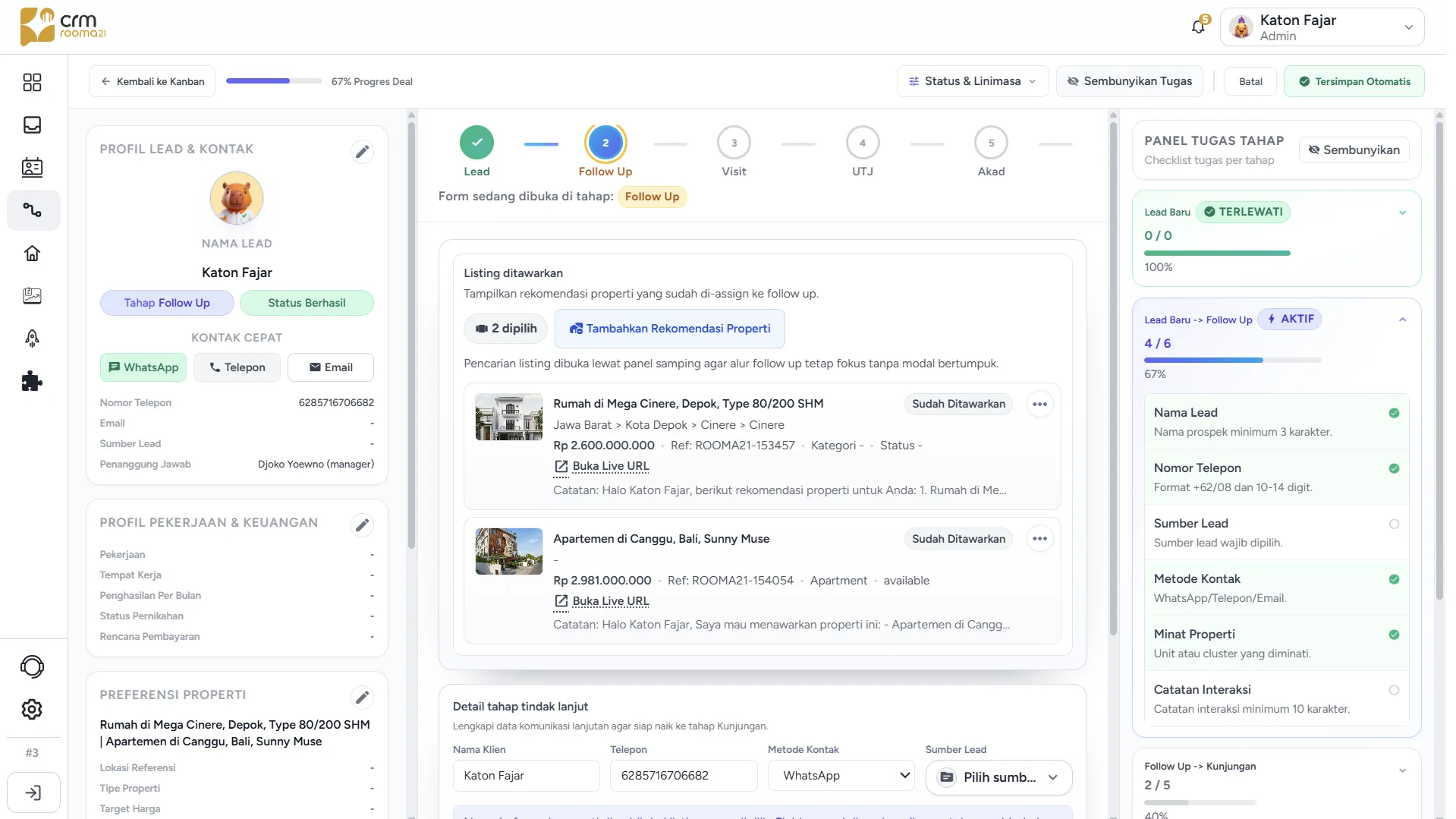
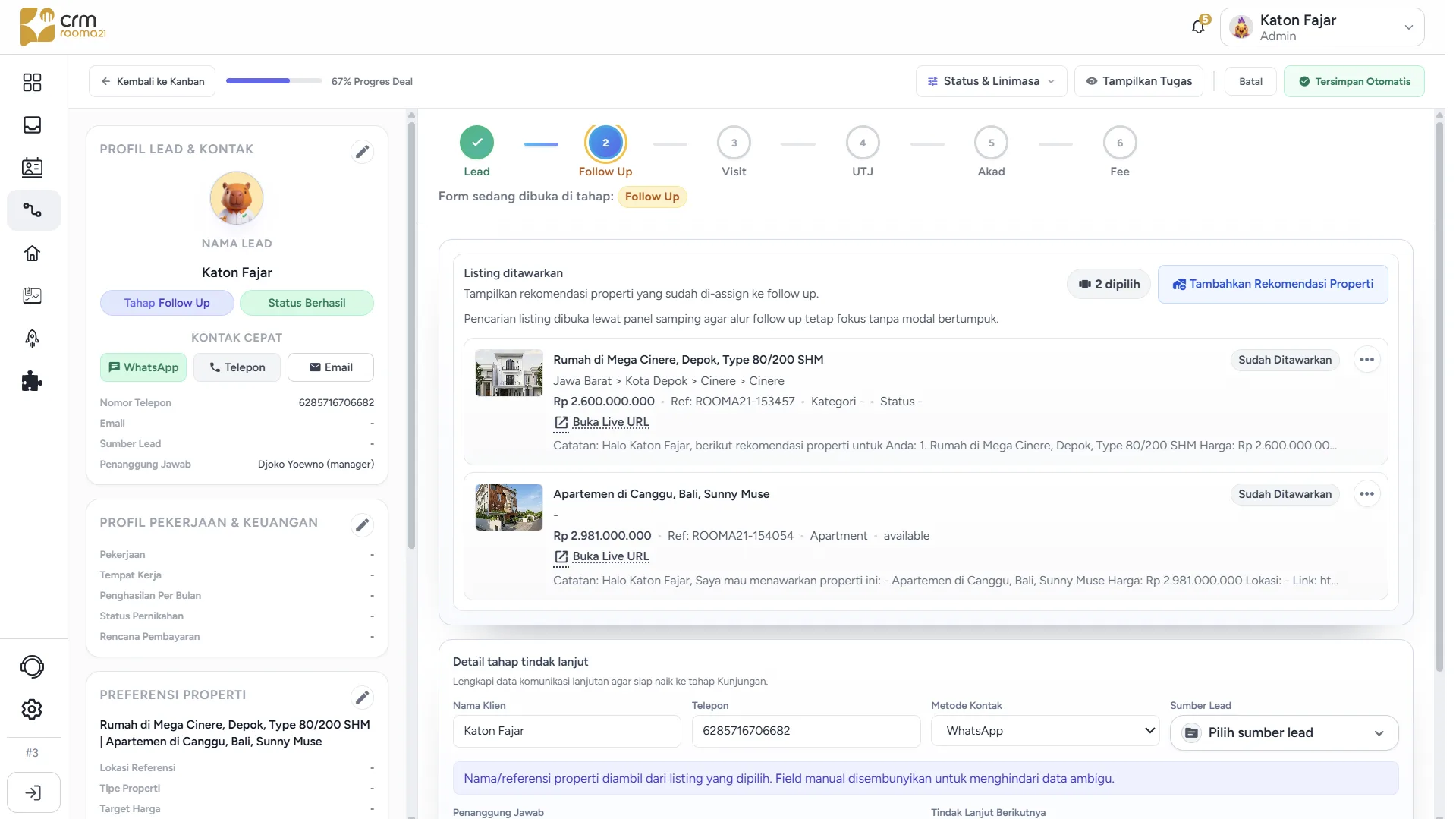
Lead conversations can be converted into deals without moving the information into a separate system.
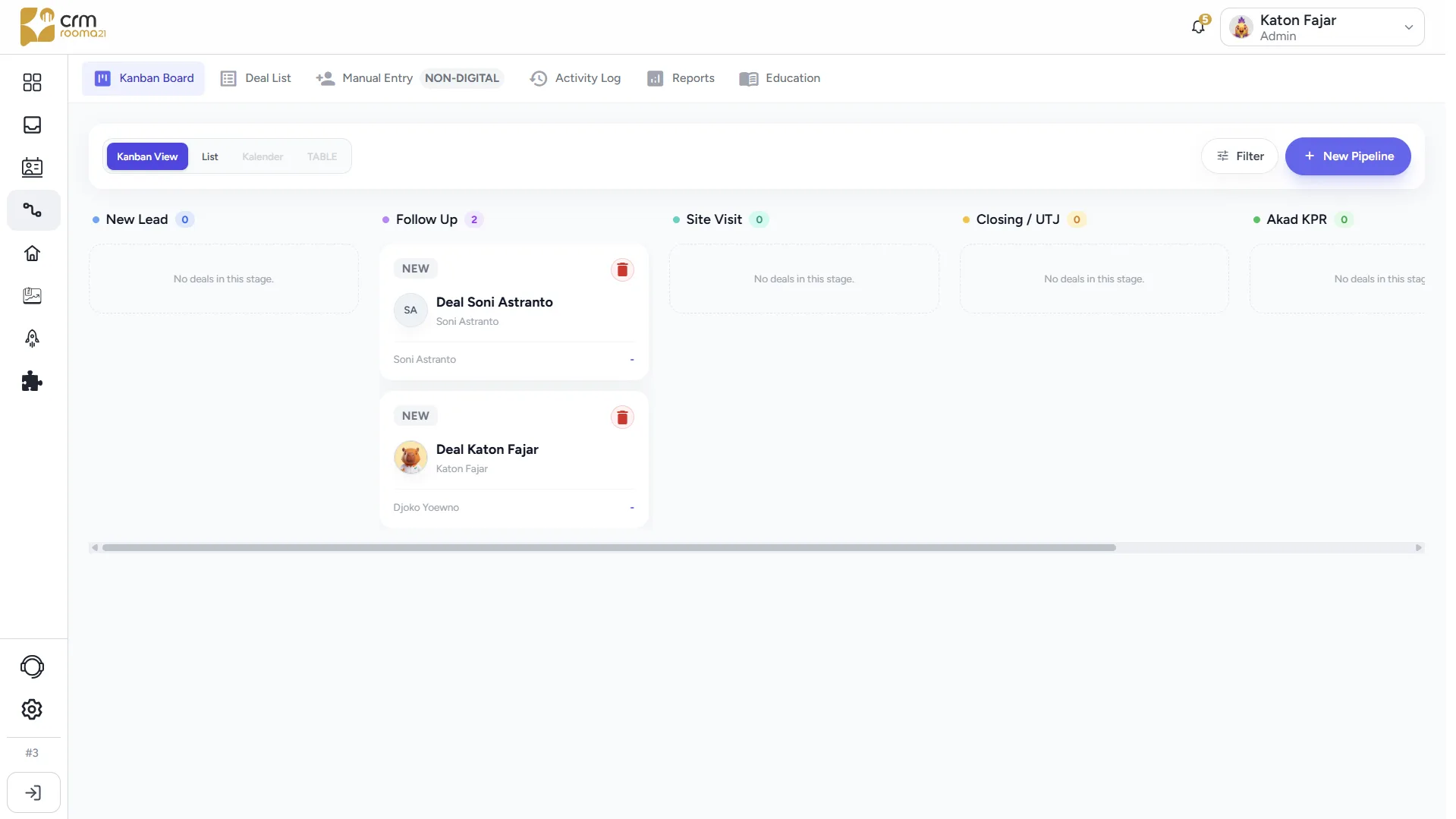
I built a sales pipeline with multiple stages that represent the progression of a prospect throughout the follow-up process.
Deals can be created directly from conversations and managed through a Kanban interface. The team can move deals between stages, update deal information, and review stage transition history.
This keeps conversations and sales activities connected instead of treating chat activity as something separate from the actual sales process.
Automation and Quick Replies
To reduce repetitive communication tasks, the CRM provides quick replies and basic automation.
Agents can use reusable response templates, while merge variables automatically insert selected information into messages without requiring it to be typed manually each time.
Automation also includes welcome and away messages with controls designed to prevent excessive automated responses.
Broadcast Campaigns
The CRM includes a campaign builder for broadcasting messages to selected groups of contacts.
Recipients can be segmented using criteria such as tags, while contacts that do not meet sending requirements or have opted out can be excluded from delivery.
Broadcasts are processed through background queues rather than being sent as one large browser request. The system also tracks recipient-level progress and statuses so campaign execution can be monitored.
Analytics Dashboard
The dashboard provides operational visibility into communication and sales activities.
Available information includes response time, handling time, conversation statuses, message trends, channel composition, agent activities, closing ratios, estimated values, and sales funnels based on deal stages.
Dashboard periods can also be adjusted so the team can review performance across different time ranges.
Quality Assurance and Production Readiness
CRM development was carried out incrementally, with automated testing added across the main application domains.
Test coverage includes tenant isolation, authentication, roles and permissions, contact management, import/export processes, inbox workflows, messaging adapters, webhooks, storage, sales pipelines, automation, broadcasts, and analytics.
Queue-based processes also include retry strategies, backoff handling, failure handling, and logging.
In addition to application development, the project includes deployment documentation, failed-job monitoring, and backup/restore checklists as part of production readiness.
My responsibilities included:
- translating CRM requirements into domain structures and operational workflows;
- designing the application architecture and multi-tenant data isolation;
- developing the Laravel backend and Inertia/Vue frontend;
- building contact management and import/export workflows;
- developing the omnichannel inbox and conversation routing;
- designing the messaging provider abstraction layer;
- implementing WhatsApp messaging, webhooks, and queue processing;
- building sales pipelines and deal management;
- developing automation, quick replies, and broadcast campaigns;
- implementing role-based access control and audit trails;
- developing the analytics dashboard;
- writing automated tests and preparing production hardening and deployment documentation.